Personalized Laboratory Medicine: Putting the Patient First
Centre Spatial de Liège – CSL – Liège Space Centre: Developing space technologies for Earth and Space monitoring
A research centre operated by the University of Liège (Université de Liège), the Liège Space Centre (CSL) is employing 100 people and leading almost 60 projects for an annual turnover of €19 M. It has the advantage of being a non-profit research organisation, with a funding from industrial contracts and R&D collaborations. Spatial qualification testing, design of optical instruments for use in space, development of thermal, mechanical and electronic engineering expertise, technological partnerships for R&D projects, scientific space missions, expertise in cryogenic cooling… 🧑🚀 🛰️ 🌌
Dendrogenix: Addressing unmet medical needs in neurology
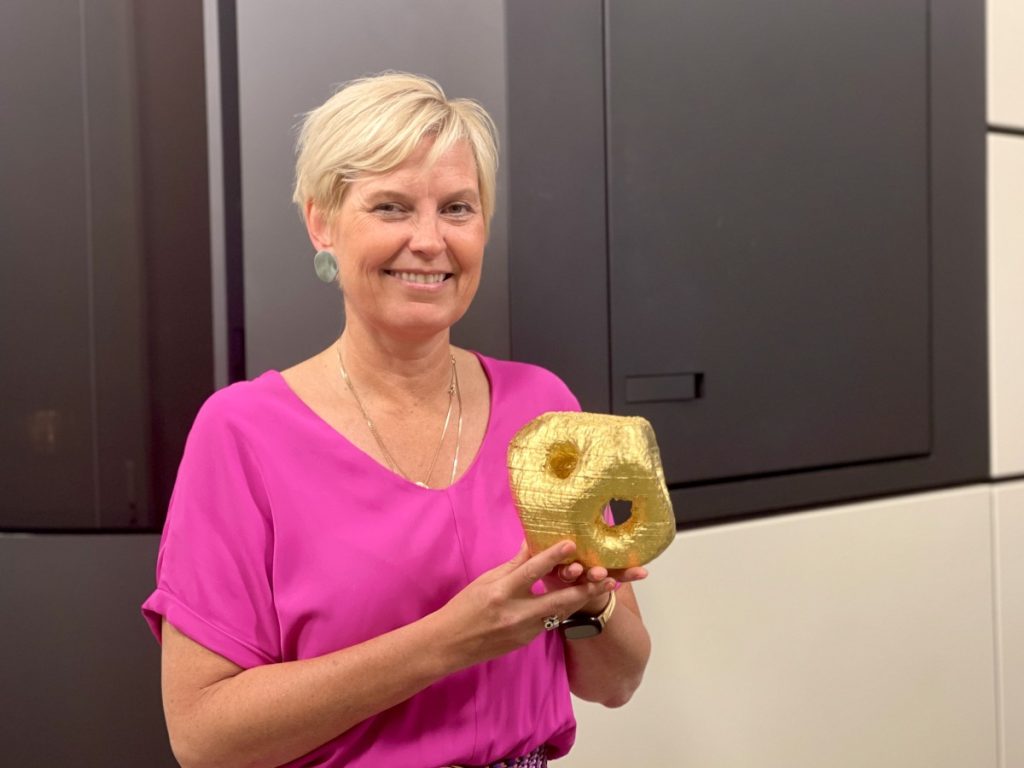
Prof. Aude Simar iMMC – Institute of Mechanics, Materials and Civil Engineering – UCLouvain
Centre for Health Economics Research and Modelling Infectious Diseases (CHERMID): Multidisciplinary approach to tackle infectious diseases
Mathematical modelling of infectious diseases and health economic evaluation both have become very important topics of research. This motivated Prof. Dr. Philippe Beutels to establish the Centre for Health Economics Research and Modelling Infectious Diseases (CHERMID) at the Universiteit Antwerpen in 2007. The CHERMID team is a highly interdisciplinary research group with expertise in economics, statistics, mathematics, medical sciences, physics, computer science, biology, philosophy and sociology. 🦠📊👨💻
Novikova Lab – Ecological Genomics: Discovering the Secrets of Adaptation
Polina Novikova heads the Ecological Genomics Lab at the VIB-UGent Center for Plant Systems Biology (PSB) and is an Associate Professor at the Department of Plant Biotechnology and Bioinformatics at Ghent University since 2025. Her group seeks the explanation of polyploidy-driven adaptation to environmental stress. Fundamental questions, large population datasets and common garden experiments contribute to this multidisciplinary research… with a lot of exciting scientific questions ahead! 🌱🌿 🍃
LPNE at UMONS: Exploring the Nanoscale to Shape the Energy Technologies of Tomorrow
Developing cleaner energy sources, improving energy conversion, and enabling sustainable energy storage are among today’s most pressing scientific challenges. At the University of Mons (UMONS), the Laboratory for Physics of Nanomaterials & Energy (LPNE) is helping to address these challenges by investigating matter at the nanoscale and designing advanced materials for next-generation energy technologies. 🔋⚡💡☀️🪫
Laboratory of Food Chemistry and Biochemistry at KU Leuven: A Glimpse of Tomorrow’s Food
Over the years, the Laboratory of Food Chemistry and Biochemistry at KU Leuven investigated a wide range of products, including pasta, biscuits, Liège waffles, croissants, breakfast cereals, gingerbread, speculoos, and oat drinks—in fact, almost every food product made from grains. 🍞 🍺 🫑
Electron Microscopy for Materials Science (EMAT): To see what no one saw before
Internationally, Universiteit Antwerpen focuses on several strategic research areas. One of the key domains is electron microscopy for materials science. The EMAT research group is a global leader in this field, with a particular focus on electron tomography using transmission electron microscopy (TEM). From 2D to 3D atomic imaging, imaging under real-world conditions, advanced instrumentation, important contributions, the NANOlight centre of excellence, collaboration and applications… Find out more with Prof. Dr Sara Bals. 🔬