

The University of Antwerp awards about 250 PhDs every year. It has 23,000 students, 17.5% of whom are from other countries. Together, its nine faculties offer 154 programmes, 29 of which are entirely English-spoken. Together, they also pool a wide range of fundamental and practice-oriented research. Core facilities, applications from basic research, centres of excellence, gold particle research… Vice rector research and impact Maarten Weyn & Vice rector valorisation and development Steven Van Passel tell us all! 🧬 🧫 👩🔬
Ghent University: Interdisciplinary cooperation as a core strategy

1K
For more than two centuries, Ghent University (UGent) has built a solid scientific reputation, investing in fundamental, high‑risk, and applied research alike. Today, it is internationally renowned for its expertise in life sciences, (animal) medicine, materials science, agricultural and sports sciences, psychology, and history. 🧑🔬👨🔬 🧫 🧬
UZ Gent: A dynamic organisation in full development

5K
With over 3,000 patients daily and more than 6,500 employees, Ghent University Hospital (UZ Gent) is one of the largest and most specialised hospitals in Flanders. Scientific spearheads, a new building (Nobel I), a new cleanroom and the birth of Belgium’s first baby born after a uterus transplant: have a look!
Centre for Health Economics Research and Modelling Infectious Diseases (CHERMID): Multidisciplinary approach to tackle infectious diseases
91
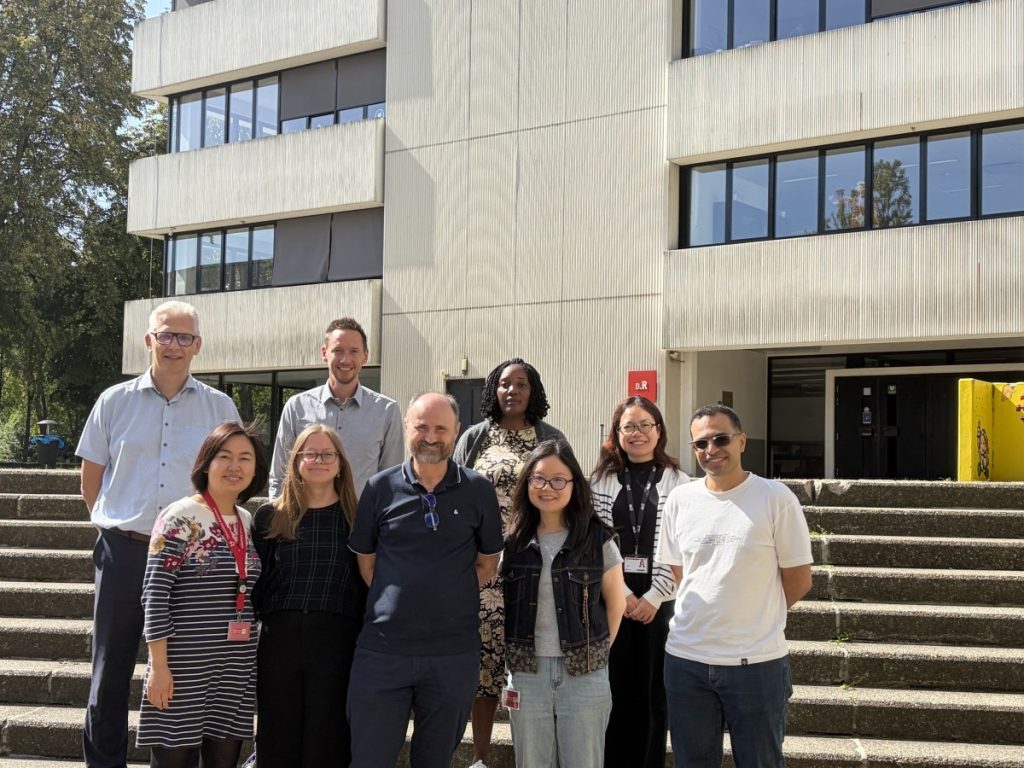
Mathematical modelling of infectious diseases and health economic evaluation both have become very important topics of research. This motivated Professor Dr. Philippe Beutels to establish the Centre for Health Economics Research and Modelling Infectious Diseases (CHERMID) at the University of Antwerp in 2007. The CHERMID team is a highly interdisciplinary…
VLAIO: a one-stop-shop for entrepreneurs in Flanders

7K
VLAIO: Empowering Entrepreneurs in Flanders. Groundbreaking innovation, cutting-edge research, and transformative support await Flanders’ entrepreneurs. Discover how VLAIO is reshaping the business landscape, providing crucial financial backing, fostering R&D, and boosting international competitiveness. Ready to learn how this agency is making a real-world impact? 🚀🔍
Novikova Lab – Ecological Genomics: Discovering the Secrets of Adaptation

201
Polina Novikova heads the Ecological Genomics Lab at the VIB-UGent Center for Plant Systems Biology (PSB) and is an Associate Professor at the Department of Plant Biotechnology and Bioinformatics at Ghent University since 2025. Previously she led a research group at the Max Planck Institute for Plant Breeding Research (Cologne).…
Laboratory of Food Chemistry and Biochemistry at KU Leuven: A Glimpse of Tomorrow’s Food
343
Over the years, the Laboratory of Food Chemistry and Biochemistry at KU Leuven investigated a wide range of products, including pasta, biscuits, Liège waffles, croissants, breakfast cereals, gingerbread, speculoos, and oat drinks—in fact, almost every food product made from grains. 🍞 🍺 🫑
Electron Microscopy for Materials Science (EMAT): To see what no one saw before

335
Internationally, Universiteit Antwerpen focuses on several strategic research areas. One of the key domains is electron microscopy for materials science. The EMAT research group is a global leader in this field, with a particular focus on electron tomography using transmission electron microscopy (TEM). From 2D to 3D atomic imaging, imaging under real-world conditions, advanced instrumentation, important contributions, the NANOlight centre of excellence, collaboration and applications… Find out more with Prof. Dr Sara Bals. 🔬
4for2: Promising New Concept for Nanomicroscopy

358
Researchers from KU Leuven (Belgium), Chalmers University of Technology (Sweden), University of Gothenburg (Sweden), and PIONEER EU Alliance – Universidad de Huelva (Spain) have developed an innovative concept to enhance the application of multiphoton microscopy. The implementation of this ‘4for2’ concept is expected to pave the way for improved tools in the clinical diagnosis and monitoring of diseases. 🔬
University of Applied Sciences Howest launches mission-driven research policy across five domains

901
Anticipating the future, that is Howest’s ambition. With a mission-driven research policy, the university of applied sciences is now clustering its research activities into five strategic domains: digital, ecological, health, learning and social, all linked to concrete societal missions. In 2026, with support from the European Regional Development Fund (ERDF/EFRO), Howest opens two new labs: the Circular Solution Lab in Kortrijk and the Howest Digital Health Lab in Bruges. 🏥💉🩹👨⚕️