
Mathematical modelling of infectious diseases and health economic evaluation both have become very important topics of research. This motivated Professor Dr. Philippe Beutels to establish the Centre for Health Economics Research and Modelling Infectious Diseases (CHERMID) at the University of Antwerp in 2007. The CHERMID team is a highly interdisciplinary research group with expertise in economics, statistics, mathematics, medical sciences, physics, computer science, biology, philosophy and sociology.
“We conduct research on such topics as the economic impact of infectious diseases, societal preferences for health care prioritisation and social mixing patterns for disease transmission models,” explains Professor Beutels. Every year, we organise international summer school courses for people who have an interest in quantitative research, and who want to learn about infectious disease models and health economic evaluations.”
Philippe Beutels started his research with model-based economic evaluations of vaccination programs in the 1990s. He established his reputation early by questioning the standard recipes and exploring multidisciplinary approaches.
Australian experience
In 2002–2003 Beutels ran one of the world’s first empirical surveys of the everyday social contacts through which respiratory pathogens are transmitted. After a 2 year stint at the University of Sydney and the University of Technology at Sydney, he returned to Antwerp in 2005. The Australian experience inspired him to write a new grant application for strategic basic research to start building capacity in Flanders around modelling and economics of infectious diseases (SIMID). The policy relevance came quickly. In 2006, commissioned by Belgium’s Health Care Knowledge Centre (KCE), Beutels produced one of Europe’s first economic evaluations to recommend a reduced-dose pneumococcal vaccination schedule for healthy infants (as he did earlier for Australia).
Built at the intersections
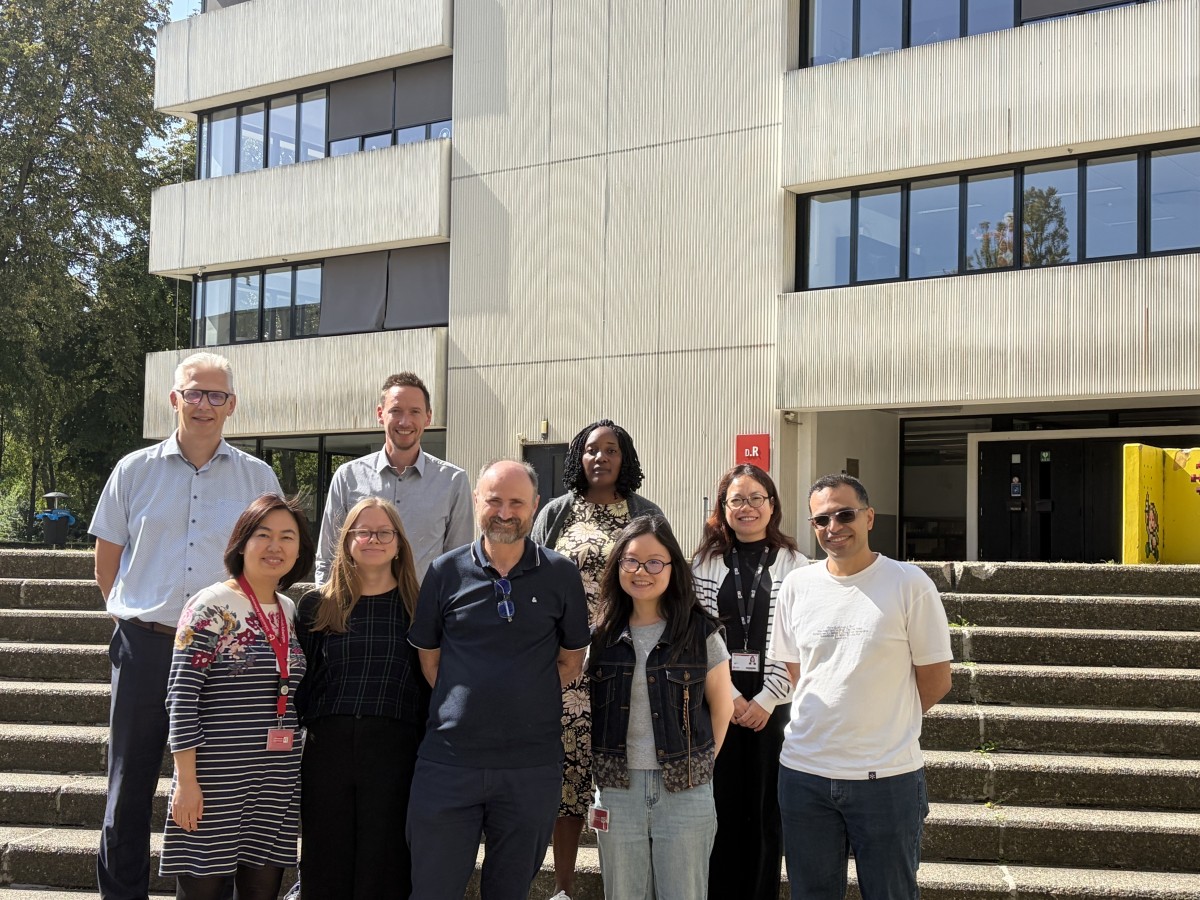
CHERMID was expanded recruiting talented youngsters from various disciplines. The current group of Professors emerged from this recruitment and include biologist-biostatistician Joke Bilcke, physicist-paediatrician Benson Ogunjimi, bio-engineer-health economist Lander Willem, and mathematician-statistician Niel Hens, who is deputy director of CHERMID and head of the Data Science Institute at Hasselt University. Professor Hens also codirects the inter-university SIMID modelling consortium with Philippe Beutels. The output of CHERMID’s current team of around fifteen researchers ranges from specialist titles in health economics and biostatistics to broad-scope journals in medicine and natural sciences, as well as government reports. “Almost all postdoctoral and doctoral researchers come from outside Belgium, representing countries across Asia, Africa, Europe and the Americas.”
Mission
CHERMID’s mission is to consolidate its expertise in advanced health-economic evaluation and in models of infectious-disease immune response and transmission, and to drive further advances in methods, data collection and policy-relevant research at an international level.
Durable infrastructure
CHERMID distinguishes itself from a consultancy by developing durable scientific infrastructure that continues to support future research and policy work. “For instance, our RSV modelling platform, MCMARCEL was originally designed for infants in lower-income countries eligible for international vaccine support. It was subsequently adapted for South Africa, and extended into more detail to European countries (most recently the UK and Belgium), with its sister MCMARCELA applied to adult RSV vaccination. STRIDE, an individual-based model developed since 2010, simulates respiratory disease spread across all eleven million residents of Belgium and was rapidly repurposed in 2020 to test lockdowns, contact ‘bubbles’ and vaccine rollout for Covid-19. In 2021, the group’s T-cell modelling research led to the creation of the University of Antwerp spin-off ImmuneWatch.
Widening map
Current projects point towards the next phase of CHERMID’s research agenda. ANTICIPATE pairs artificial intelligence with epidemic modelling to ready hospitals for the next respiratory pathogen with pandemic potential. VAXINAID-C2P will carry the centre’s vaccine and data-science work from ‘cell to policy’ through the end of the decade.
CHERMID is well connected internationally, with long term ties to the London School of Hygiene & Tropical Medicine, the Yale School of Public Health and universities across Australia, the Netherlands, the United Kingdom and France. The centre is now expanding these collaborations into East Asia. “The interest is not new in spirit: the SARSControl project two decades ago was already a China–Europe collaboration.”

CHERMID
Campus Drie Eiken – Gebouw S, S241
Universiteitsplein 1
B-2610 Antwerpen
T: +32 (0)3 256 26 58
