
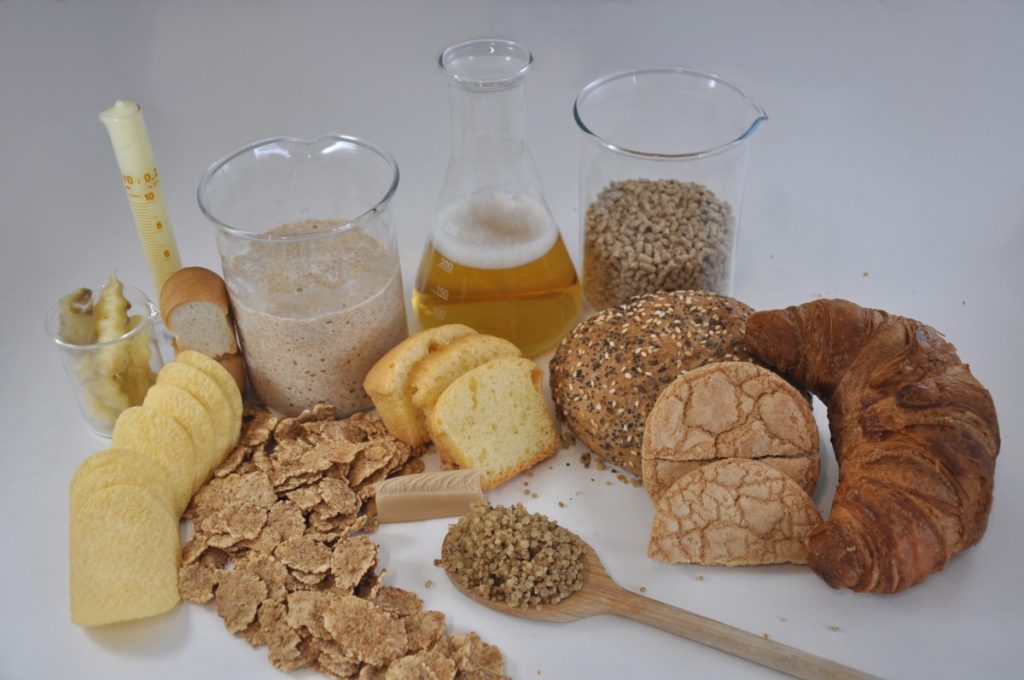
Over the years, the Laboratory of Food Chemistry and Biochemistry at KU Leuven investigated a wide range of products, including pasta, biscuits, Liège waffles, croissants, breakfast cereals, gingerbread, speculoos, and oat drinks—in fact, almost every food product made from grains.
“We study grains and their main constituents: starch, proteins, dietary fibre, and lipids,” says Innovation Manager Kristof Brijs. “Our research also focuses on how these constituents, as well as other ingredients, behave during food processing and how they determine the quality of grain-based foods such as bread, beer, sourdough products and plant-based foods.”
“It is our mission to generate fundamental insights into the structure and functionality of food constituents, with a particular focus on cereals and legumes. We use this knowledge to better understand and improve food processing, enhance food product quality, and optimise the health benefits of food products. Much of our current expertise has its roots in our pioneering research on bread.”
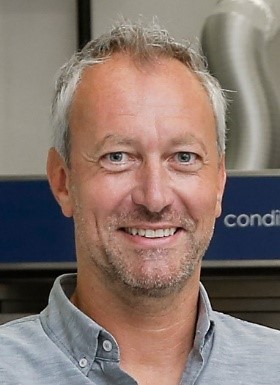
Sufficient time for each project
The laboratory is funded through a combination of competitive research grants from KU Leuven, the Research Foundation – Flanders (FWO) and European funding programmes. Industry partners also fund endowed chairs at the university. Many research projects are supported by VLAIO, through which companies collaborate with the university to address specific research challenges. “These projects typically run for three years, while maintaining a good balance between generating fundamental knowledge and translating our findings into industrially relevant applications in cereal science and technology.”
AB InBev, Alpro-Danone, Beneo-Remy, Kellogg, Lotus Bakeries, Mars, Nestlé, Puratos, Soubry, Vandemoortele… many leading companies in the food industry already collaborated with the Laboratory of Food Chemistry and Biochemistry. The laboratory also works closely with Flanders’ FOOD, the spearhead cluster for the Flemish agro-food industry.
“Many small and medium-sized companies also approach us with research questions” says Brijs. “The food industry is increasingly looking for healthier products. We investigate how foods can be reformulated to contain less fat, less sugar, or more dietary fibre without compromising quality. This means looking beyond the ingredients themselves and considering taste, texture, processing, and shelf life. Can we keep waffles fresh for longer? How can we incorporate plant proteins into cereal-based products? How can we improve breadmaking?”
The research has already resulted in several successful industrial innovations. In collaboration with Puratos, researchers developed a process that enables the production of sweeter cakes using regular instead of chlorinated flour. Another success story was the optimisation of the production process for Ben’s rice pouches, helping to reduce cooking times while maintaining product quality.
Valorisation
Against the backdrop of the European Green Deal, the transition to a circular economy, the shift towards more sustainable diets—including the protein transition—and the growing demand for healthier foods are becoming increasingly important. These developments create new scientific and technological challenges for the food industry.
“Our ambition is to translate fundamental scientific insights into solutions for these emerging challenges,” explains Brijs. “Future research will increasingly focus on the sustainable use of raw materials, the valorisation of co-products and side streams, improving the sustainability of food production processes, selecting more resilient crops, and understanding how climate change affects raw material quality and food processing.”
Therefore, the laboratory brings together KU Leuven’s and its national and its international partners expertise, creating a strong foundation for innovation and technology transfer. Research collaborations range from short-term analytical support and service contracts to large-scale, multi-year research projects. “Many long-term collaborations actually start with a relatively small question from industry. These first projects often grow into strategic partnerships in which we jointly develop new knowledge and technologies.”
Kristof Brijs obtained his M.Sc. (1997) and PhD (2001) degrees in Applied Biological Sciences from KU Leuven. From 2001 to 2006, he worked as a postdoctoral researcher in the Laboratory of Food Chemistry and Biochemistry. Since 2006, as an IOF Innovation Manager, he has facilitated knowledge transfer between academia and industry and has gained extensive experience in coordinating multi-partner research projects and developing collaborations with industry.
Innovation Management
The IOF Innovation Manager position was introduced in 2005. “Universities were given considerable freedom in how they implemented these roles”, Brijs explains. “Elsewhere, institutions often opted for business developer profiles, whereas KU Leuven chose to appoint people with a research background in a specific scientific domain. This allows us to understand both the scientific and industrial perspectives and to support companies throughout the entire innovation process, from identifying research questions to translating scientific knowledge into practical applications.”
Laboratory of Food Chemistry and Biochemistry
KU Leuven – Faculty of Bioscience Engineering
Kasteelpark Arenberg 20
B-3001 Heverlee
Kristof Brijs
Innovation Manager
Tel: +32 (0)16 32 14 84
Email: kristof.brijs@kuleuven.be
