
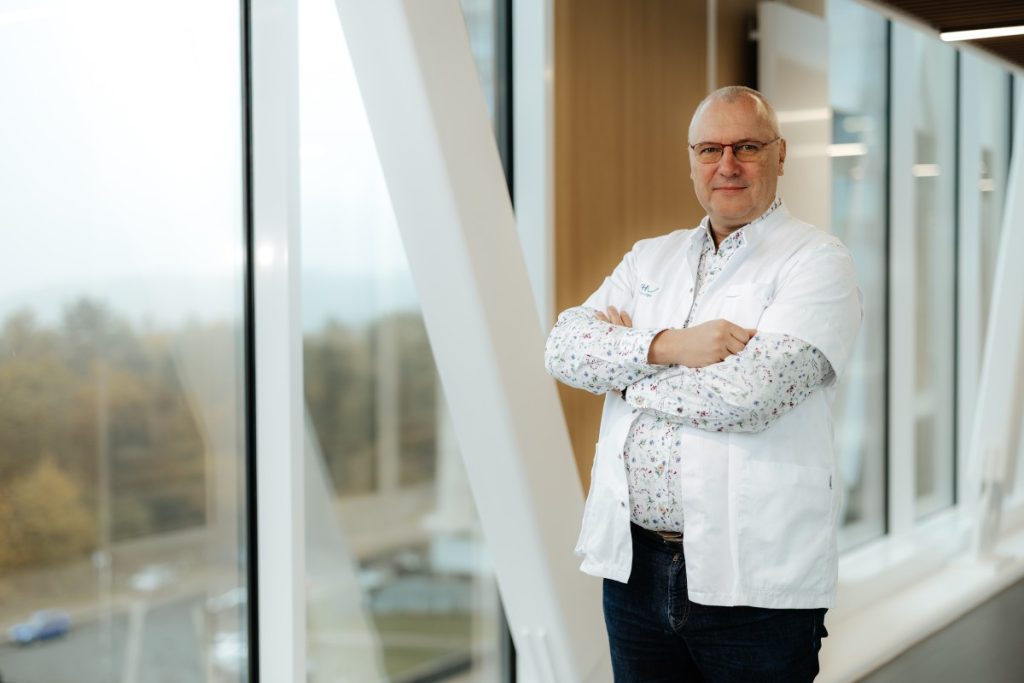
An interview with Professor Etienne CAVALIER,
Professor of Clinical Chemistry, University of Liège, Head of Clinical Chemistry and President of the Department of Laboratory Medicine, CHU de Liège, President of the Royal Belgian Society of Laboratory Medicine (RBSLM), Co-Editor-in-Chief of Calcified Tissue International, General Secretary of the European Society for Clinical and Economic Aspects of Osteoporosis, Osteoarthritis and Musculoskeletal Diseases (ESCEO), Administrator of the Belgian Bone Club (BBC), Vice-Chair of the Committee of Scientific Advisors of the International Osteoporosis Foundation (IOF), Chair of the Joint IOF Working Group and IFCC Committee on Bone Metabolism, Chair of the Committee on Chronic Kidney Disease of the European Federation of Clinical Chemistry and Laboratory Medicine (EFLM)
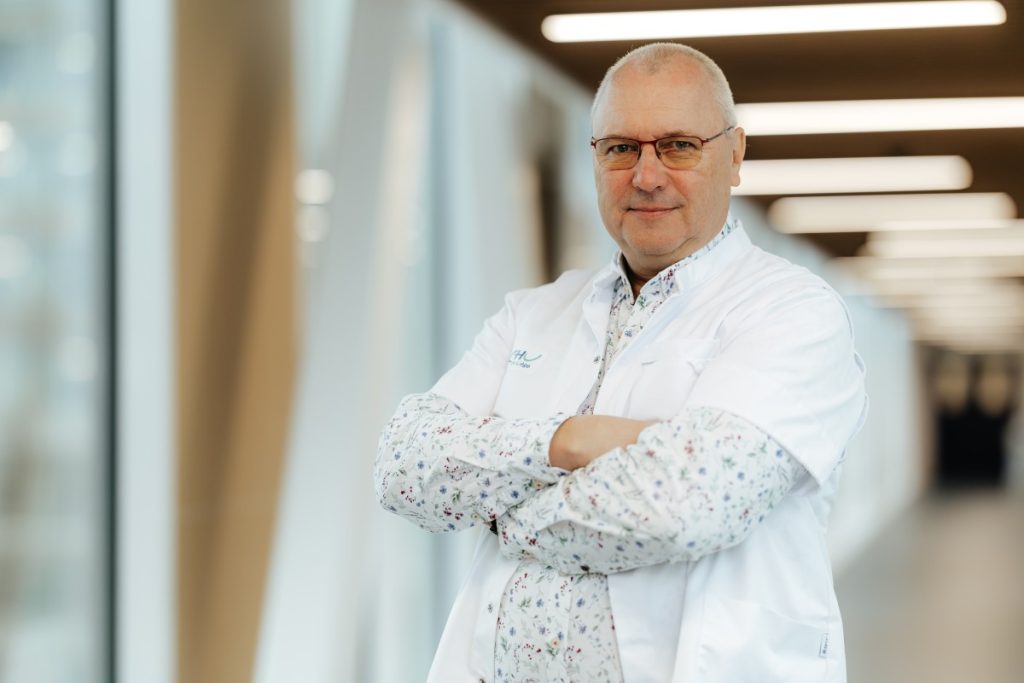
Could you present your expertise?
I am Professor of Clinical Chemistry at the University of Liège and Head of the Department of Clinical Chemistry at CHU de Liège. Our department has access to most major immunoassay analysers, around ten triple-quadrupole and two high-resolution mass spectrometers, 80 MHz and 600 MHz NMR instruments, and highly specialized platforms such as Olink and Simoa. My team includes five specialists in clinical biology, four postdoctoral scientists, two engineers, two master-level scientists, several research-oriented laboratory technologists, and five PhD students. Most of them combine research with routine laboratory activities.
My work lies at the interface between laboratory science and clinical medicine, with a particular focus on biomarkers and on the development of analytical methods that can directly improve patient care. Clinical chemistry is not simply about measuring a concentration: the challenge is to understand what we measure, how accurately, and how the result should be interpreted in a given clinical context, which requires pathophysiological knowledge, rigorous analytical validation and advanced technologies such as mass spectrometry. My main areas of expertise include mineral and bone metabolism, kidney function and the development of new biomarkers. My objective is to move from a laboratory measurement to clinically meaningful information that can support diagnosis, monitoring and, increasingly, personalized medicine.
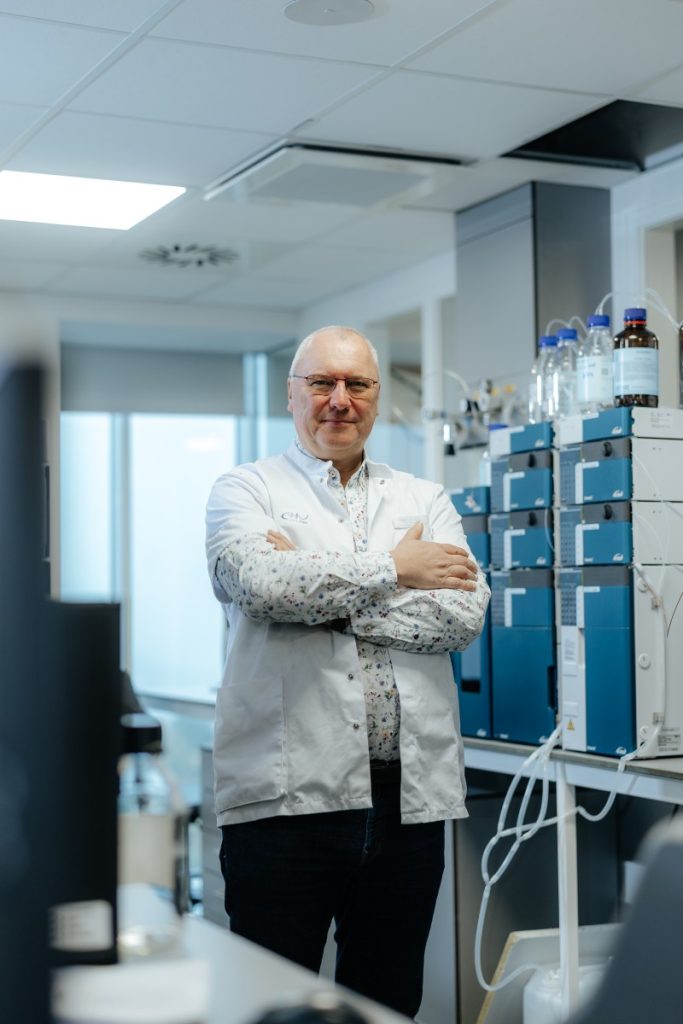
Could you tell us about your research axes in Clinical Chemistry at the CHU and the University of Liège?
I have been working for many years on mineral and bone metabolism, with a particular interest in vitamin D, parathyroid hormone and bone turnover markers. One of my main research interests is to better understand what we are actually measuring and how these biomarkers should be interpreted in different clinical situations. Vitamin D is a good example: beyond the routinely measured 25-hydroxyvitamin D, many other metabolites circulate in blood and their physiological and clinical significance is still incompletely understood. I am also particularly interested in PTH, especially in patients with chronic kidney disease, where the hormone exists in different circulating forms and where interpretation can be complex. A large part of my work therefore combines clinical questions with the development and evaluation of more specific analytical methods, in particular mass spectrometry. I am also involved in veterinary research, applying analytical approaches developed in human laboratory medicine to animal health, including hormonal and other biomarkers, reference intervals and more specific assays in different species.
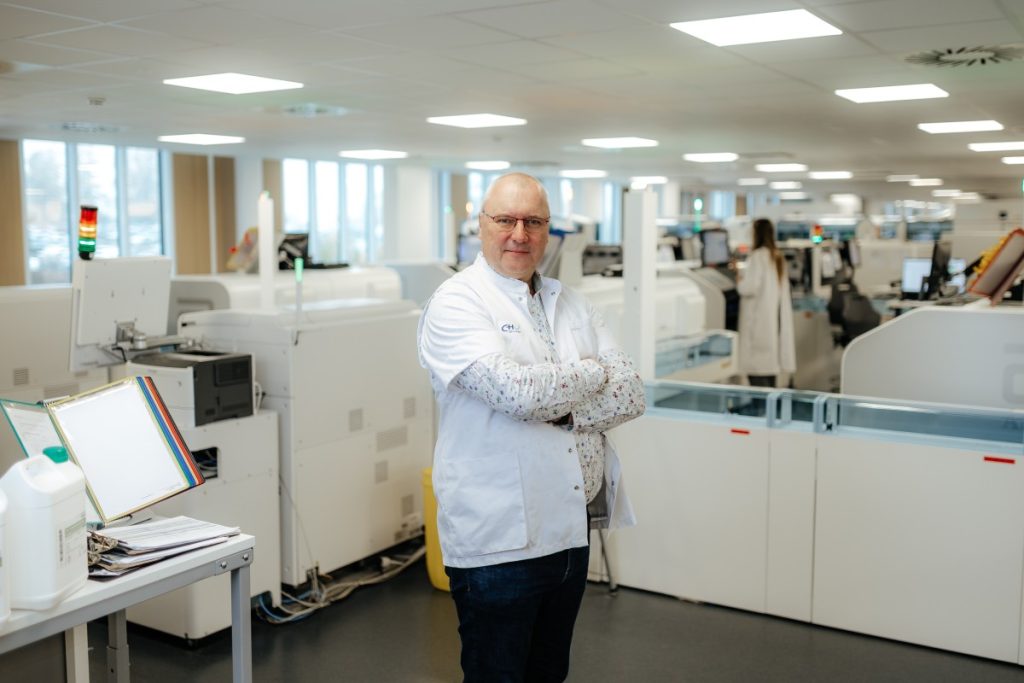
What are the main research projects in which you are currently involved?
I am currently working on several projects aimed at developing more personalized laboratory medicine, particularly through mass spectrometry. One major project concerns metabolomics and lipidomics, with the objective of identifying and measuring metabolites and lipid species that may provide clinically useful information beyond conventional laboratory tests. The challenge is not only analytical: pre-analytical conditions, interpretation and the way results are communicated to clinicians are equally important. Ultimately, the aim is to integrate metabolomic and lipidomic approaches into patient care. Another important project builds on my doctoral thesis and concerns a specific form of parathyroid hormone associated with parathyroid carcinoma, a rare but aggressive disease. We are currently developing a mass spectrometry assay for this molecule, with encouraging preliminary results for diagnosis and potentially for patient follow-up.
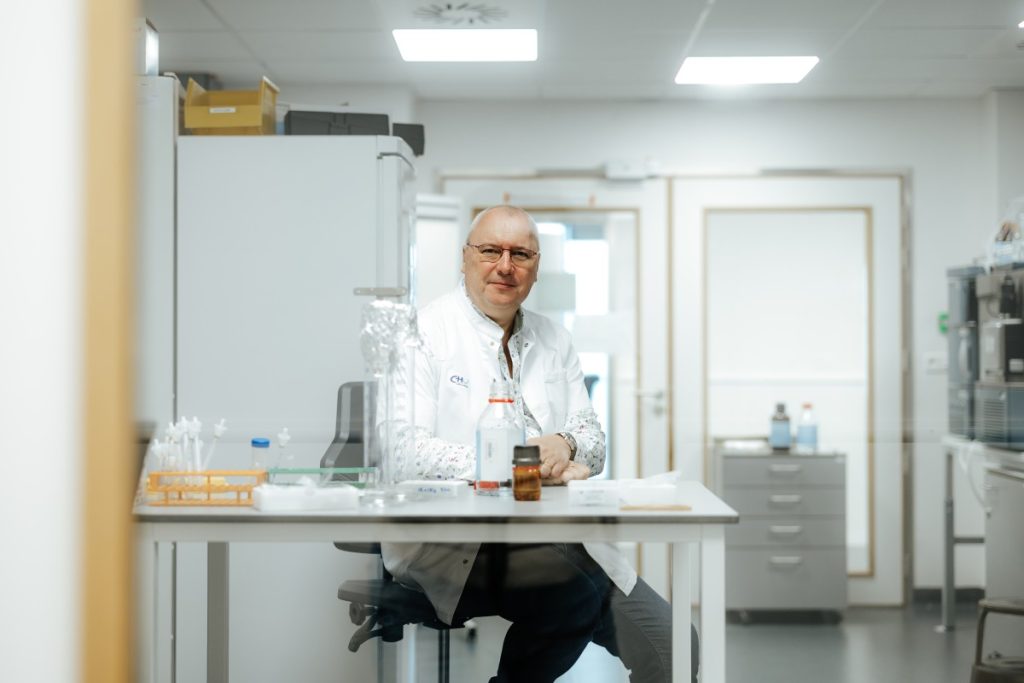
I am also working on collagenomics, the study of circulating collagen fragments, which may provide information on tissue origin and disease processes, for example in osteoarthritis, and could improve clinical management. Our veterinary research has also led to the Animalitix project, which aims to bring analytically validated diagnostic testing to veterinary medicine, particularly through mass spectrometry.
Finally, another project concerns alkaline phosphatases, an enzyme very well known in routine clinical practice, but for which surprisingly little is known about the different circulating isoforms. These isoforms are involved not only in bone formation but also in pathological mineralization, including vascular calcification. Our objective is to better characterize them, develop more specific analytical approaches, and determine whether they can provide clinically useful information, especially in patients with chronic kidney disease.
What are your main research collaborations?
I have developed close links with clinicians, nephrologists, rheumatologists and osteoporosis specialists. Biomarkers are at the centre of these collaborations. For example, I work with Dr Pierre Delanaye (CHU de Liège), the EFLM and the European Renal Association (ERA) on recommendations for the assessment of kidney function in Europe. With regard to bone, I have contributed to numerous guidelines and recommendations on biomarkers in collaboration with the IFCC and the IOF.
Could you tell us about your collaborations with industry?
Collaboration with industry is an important part of our activity, and a dedicated unit within my laboratory is devoted to these partnerships. We work with in vitro diagnostic companies from Europe, the United States, China and Japan on the analytical validation of new assays. For pharmaceutical companies and CROs, we provide specialized biomarker measurements for phase II and later-stage clinical trials, particularly in the fields of mineral and bone metabolism. Our partners seek our scientific expertise, our ISO 15189-accredited and GCLP-compliant quality environment, and our ability to develop and validate LC-MS/MS methods. These collaborations also allow us to translate methodological innovation into tools that can be used in clinical research and, ultimately, patient care.
How do you contribute to the work of other specialized scientific societies?
Within the Belgian Bone Club I collaborate with experts from different disciplines, including geriatrics, gynaecology, endocrinology and clinical epidemiology. This multidisciplinary approach allows us to develop practical recommendations for Belgian clinicians on the diagnosis, prevention and management of osteoporosis…
Likewise, I bring my expertise in clinical biology to the RBSLM, of which I have been President since 2017, a term that ends in late 2026. Laboratory medicine is still too often regarded as a cost by decision-makers, although it contributes directly to diagnosis, prevention and more efficient patient care. In Belgium, delays in the reimbursement of innovative tests can also limit their implementation in clinical practice. It is therefore important that this contribution be fully recognized.
In your view, what are the main challenges to be met in your field of research?
The main challenge is to move towards a much more personalized medicine. This will require increasingly precise biomarkers and analytical approaches, but also the ability to interpret these results in the context of the individual patient. Another important challenge is to maintain an attractive environment for research. Belgium has excellent training programs and highly motivated doctoral students, but we need to ensure that young researchers continue to see opportunities here. I remain optimistic, as the strength of our work lies in the quality of the networks we build.


Service de Chimie Clinique
CHU de Liège
Domaine du Sart-Tilman, Tour 6
Route 656
B-4000 Liège
Tel.: +32 (0)4 323 76 92
Email: etienne.cavalier@chuliege.be
https://www.uliege.be/cms/c_9054334/fr/repertoire?uid=U016215
