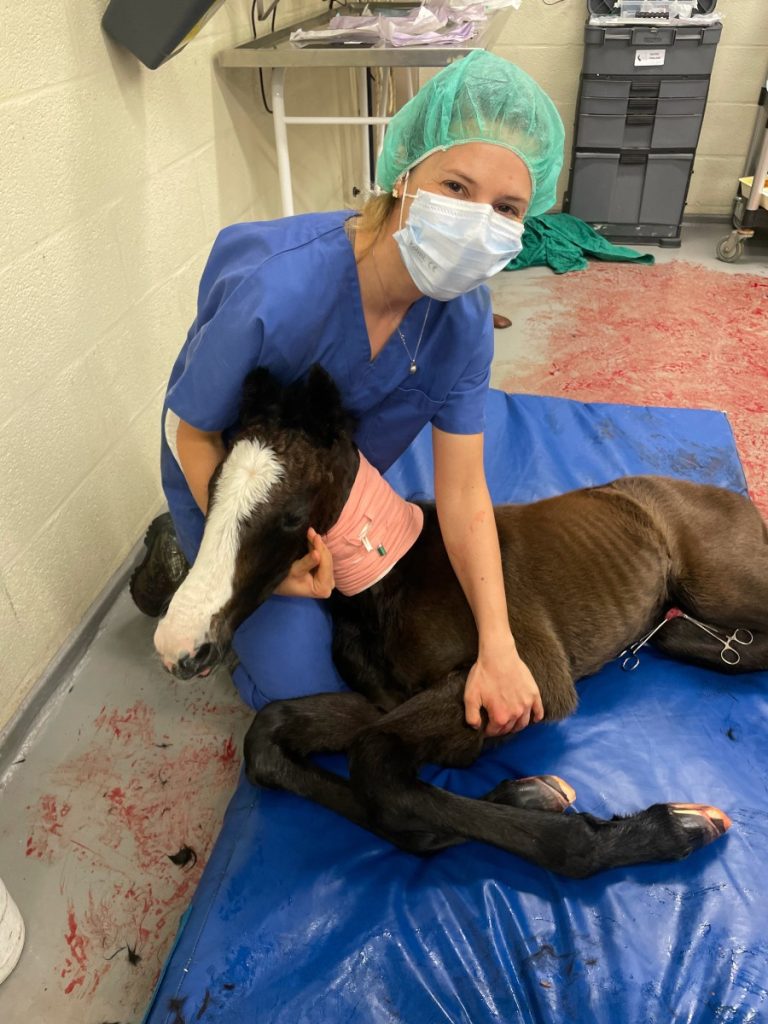
The Animalitix spin-off project, led by Joy Ledeck, a veterinarian completing her PhD under the co-supervision of Professor Etienne Cavalier (Faculty of Medicine, University of Liège – CHU de Liège) and Doctor Jérôme Ponthier (Faculty of Veterinary medicine, University of Liège), originates from a simple observation: laboratory diagnostics in veterinary medicine lag behind those routinely used in human medicine, and practitioners do not always have the tools to interpret blood-test results with confidence. The project aims to transfer human clinical-chemistry expertise to veterinary practice.
Many molecules of high diagnostic value in animals cannot be measured reliably with current immunoassays, as few specific antibodies are available. Liquid chromatography-tandem mass spectrometry (LC-MS/MS) offers a promising alternative: it identifies each molecule by its chromatographic retention and specific mass transitions, and can measure many of them specifically in a single run. Achieving adequate sensitivity and specificity remains challenging in veterinary medicine. Yet veterinary laboratory methods are not systematically validated. Consequently, applying the validation guidelines of human-medicine is therefore essential to ensure reliable results.
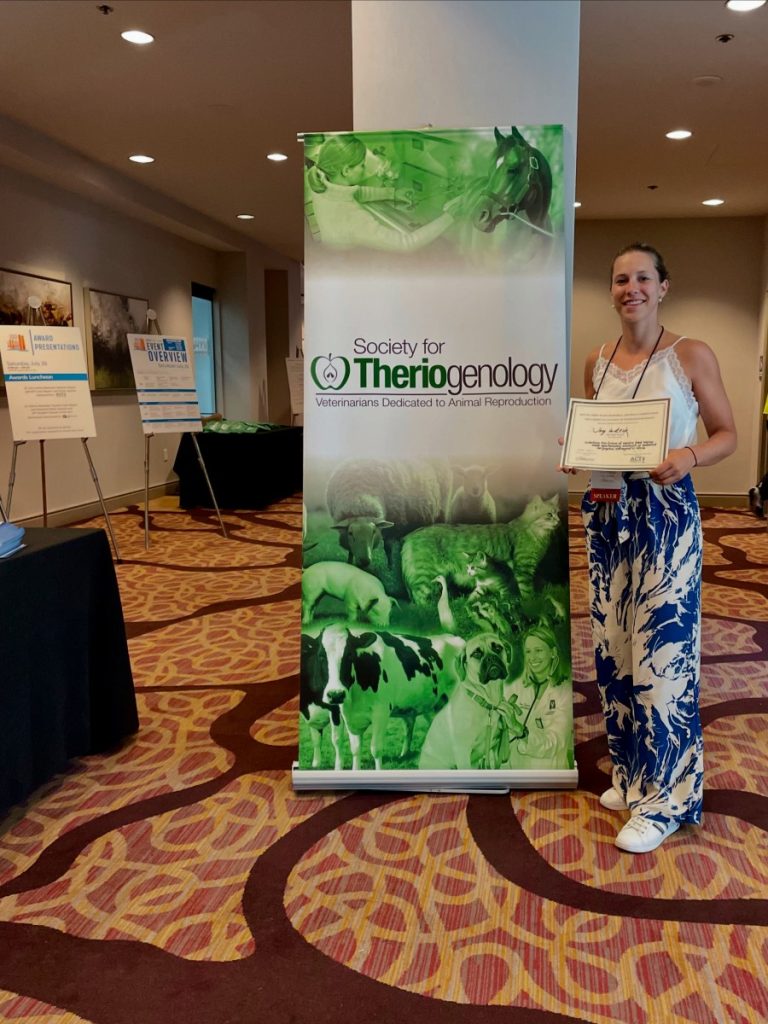
Fetal sex determination
Joy Ledeck’s doctoral research focuses on steroid hormones in pregnant mares. Her LC-MS/MS method simultaneously quantifies 24 steroids, covering the four major classes (androgens, estrogens, progestogens and corticosteroids) from a single blood sample. The resulting steroid profile enables fetal sex determination several months before birth: circulating concentrations differ according to fetal sex and are distinguishable from the fourth month of gestation until term. Whereas ultrasound sexing requires an experienced operator within narrow gestational windows, a blood test offers a much wider time frame, making it a useful complement—or alternative—to ultrasonography.
In addition, the same steroid panel shows promise for the early detection of placentitis, an inflammation of the placenta and a leading cause of abortion and premature birth in mares. Ultrasonography currently misses approximately four in ten cases, although effective treatments exist and whose success is markedly improved by early intervention. Joy Ledeck is currently analyzing samples from 133 pregnant mares, followed over six breeding seasons, to establish concentration thresholds for both fetal sex determination and the detection of placentitis, a condition that affects roughly 20 % of pregnant mares.
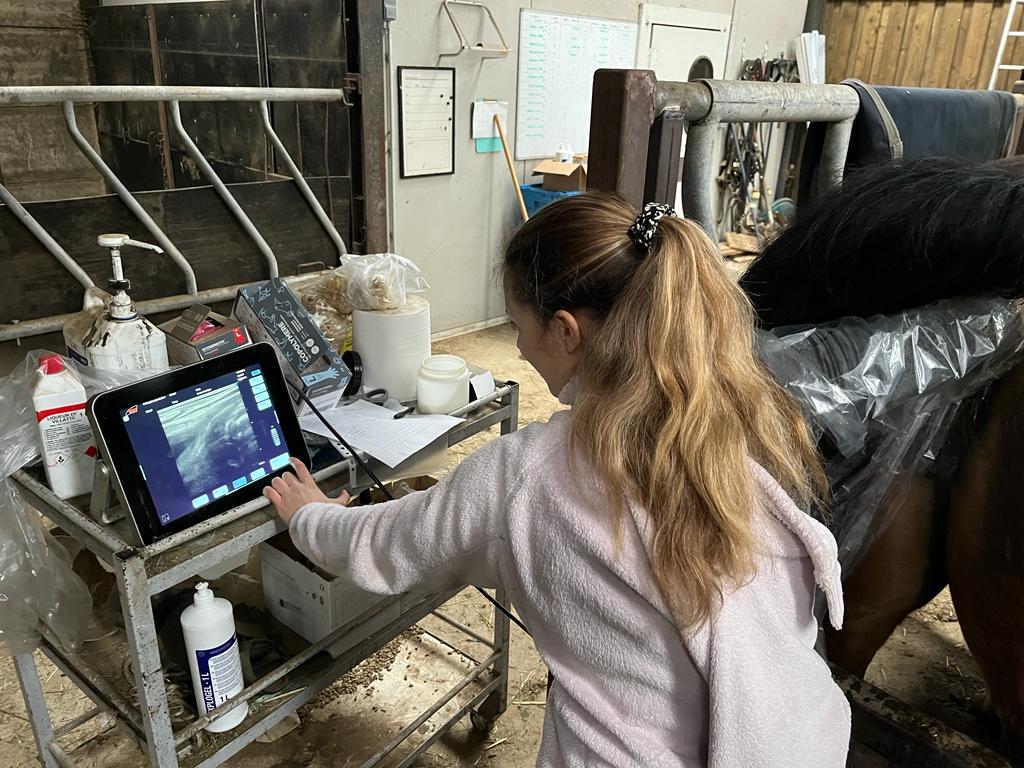
An entrepreneurship-focused PhD
Alongside her thesis, Joy Ledeck started an entrepreneurship training program at the VentureLab, incubator in Liège. Her business plan and business model are already in place. Market surveys indicate that breeders are keen on earlier, simpler fetal sex determination. After defending her thesis in January 2027, Joy Ledeck will join Professor Cavalier’s laboratory under an agreement with CHU de Liège that provides access to its analytical platforms, facilities, and technical staff. This will allow Animalitix to test its offer on the market at reduced risk, while strengthening the link and the collaboration between academia and industry.
A response to real needs
The development of high-value diagnostic assays addresses genuine unmet needs in veterinary medicine. Two patent applications have already been filed: one covering fetal sex determination in the mare, the other covering pregnancy diagnosis in American bison from fecal samples. Further research is planned in cattle (serum or milk), where fetal sexing could also be applied, and in companion animals. The next challenge is to show veterinarians the added value of results obtained with analytically validated methods. Innovation here is not only technological but also organizational: it calls for a change in diagnostic practice.
https://www.uliege.be/cms/c_9054334/fr/repertoire?uid=u228206