University Hospital Leuven remains pioneer in clinical research

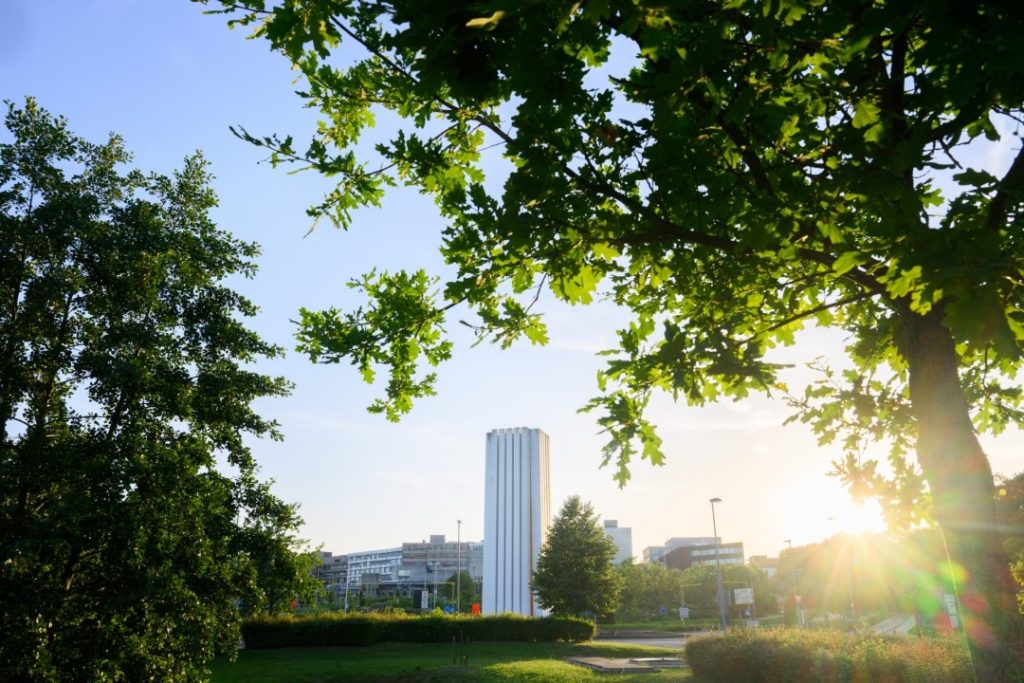
The UZ Leuven and KU Leuven biomedical research facilities are centralised at Gasthuisberg Campus. Ⓒ UZ Leuven / Dries Renglé Fotografie
3K

As the largest university hospital in Belgium, University Hospital (UZ) Leuven and its 10,000 staff members aim to push boundaries by combining specialized care and innovative treatments with a strong focus on human attention and respect. Future healthcare providers and employees receive high-quality training, emphasizing lifelong learning and innovation. 🏥⚕️👩‍⚕️

Fundamental and applied research at the University of Antwerp

Vice rector research and impact Maarten Weyn & Vice rector valorisation and development Steven Van Passel - © University of Antwerp
2K

The University of Antwerp awards about 250 PhDs every year. It has 23,000 students, 17.5% of whom are from other countries. Together, its nine faculties offer 154 programmes, 29 of which are entirely English-spoken. Together, they also pool a wide range of fundamental and practice-oriented research. Core facilities, applications from basic research, centres of excellence, gold particle research… Vice rector research and impact Maarten Weyn & Vice rector valorisation and development Steven Van Passel tell us all! 🧬 🧫 👩‍🔬

Ghent University: Interdisciplinary cooperation as a core strategy

© UGent, Jonas Vandecasteele
1K

For more than two centuries, Ghent University (UGent) has built a solid scientific reputation, investing in fundamental, high‑risk, and applied research alike. Today, it is internationally renowned for its expertise in life sciences, (animal) medicine, materials science, agricultural and sports sciences, psychology, and history. 🧑‍🔬👨‍🔬 🧫 🧬

UZ Gent: A dynamic organisation in full development

© Universitair Ziekenhuis Gent
6K

With over 3,000 patients daily and more than 6,500 employees, Ghent University Hospital (UZ Gent) is one of the largest and most specialised hospitals in Flanders. Scientific spearheads, a new building (Nobel I), a new cleanroom and the birth of Belgium’s first baby born after a uterus transplant: have a look!

Centre for Health Economics Research and Modelling Infectious Diseases (CHERMID): Multidisciplinary approach to tackle infectious diseases

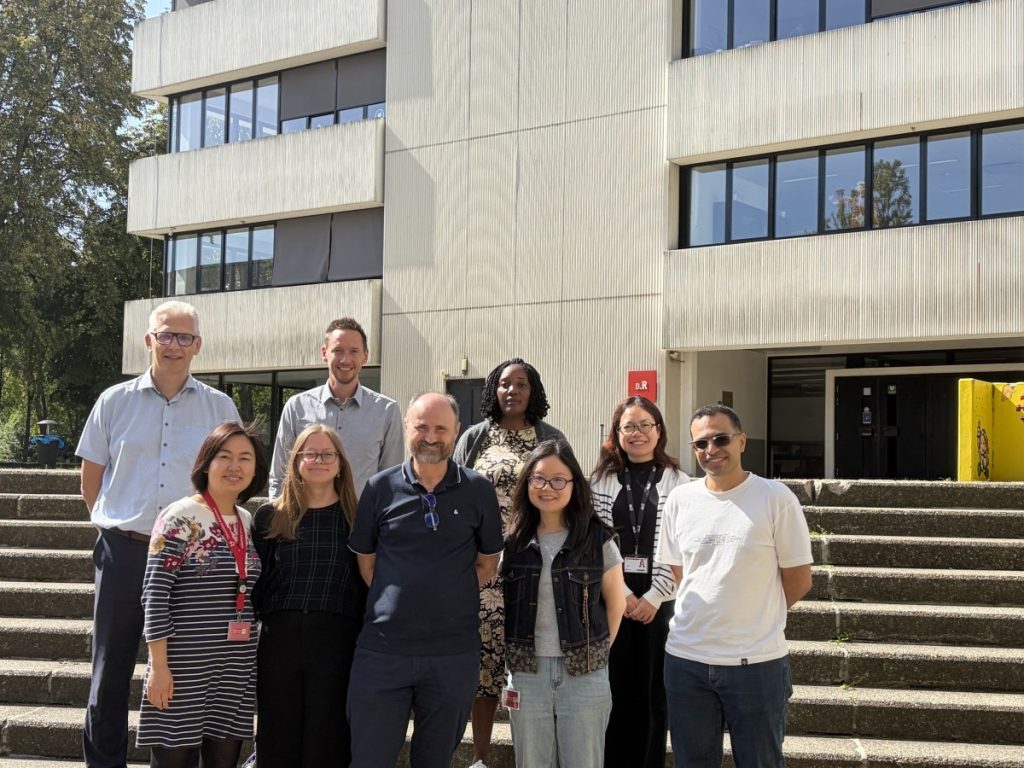
The CHERMID-team includes Dr. Xiao Li, Julia Lynn, Prof. Dr. Philippe Beutels, Dr Zhuxin Mao, Reza Rahmanian Haghighi (front row), Prof. dr. Niel Hens, Prof. dr. Lander Willem, Jane Phiry and Dr. My Ha. Not on this picture: Prof. Dr. Benson Ogunjimi, Prof. Dr. Joke Bilcke, Dr. Hajar Besbassi, Regina Manansala, Ze Liu and several PhD students. © Chermid
149

Mathematical modelling of infectious diseases and health economic evaluation both have become very important topics of research. This motivated Prof. Dr. Philippe Beutels to establish the Centre for Health Economics Research and Modelling Infectious Diseases (CHERMID) at the Universiteit Antwerpen in 2007. The CHERMID team is a highly interdisciplinary research group with expertise in economics, statistics, mathematics, medical sciences, physics, computer science, biology, philosophy and sociology. 🦠📊👨‍💻

VLAIO: a one-stop-shop for entrepreneurs in Flanders

© VLAIO
7K

In this interview with Mark Andries, general administrator for Flanders Innovation & Entrepreneurship (VLAIO), you will find out more about VLAIO’s services provided to entrepreneurs, the way it helps foreign entrepreneurs and investors to establish or expand business in Flanders, VLAIO’s support for R&D and innovation clusters in Flanders, recent developments, new funding formats & VLAIO’s international orientation. ⌬⚛🧪🔬🧬👨🏻‍🔬

Novikova Lab – Ecological Genomics: Discovering the Secrets of Adaptation

Professor Dr. Polina Novikova. © Ine Dehandschutterinedehandschutter
297

Polina Novikova heads the Ecological Genomics Lab at the VIB-UGent Center for Plant Systems Biology (PSB) and is an Associate Professor at the Department of Plant Biotechnology and Bioinformatics at Ghent University since 2025. Her group seeks the explanation of polyploidy-driven adaptation to environmental stress. Fundamental questions, large population datasets and common garden experiments contribute to this multidisciplinary research… with a lot of exciting scientific questions ahead! 🌱🌿 🍃