
In response to the reform of initial teacher training (RFIE) in the Wallonia-Brussels Federation, which led to the creation of several posts in educational studies at the University of Liège, the brand-new Centre for Science and Mathematics Education Research (CRDSM) will be operational for the 2026–2027 academic year within the DIDACTIfen Interdisciplinary Research Unit. Its objective: to develop research in mathematics and science education that enables learners to achieve effective learning in the relevant disciplines.
Epistemological obstacles related to learning these disciplines, taking into account learners’ prior conceptions, as well as the domains of validity of certain scientific (including graphical and visual representations) and mathematical models, are at the heart of the Centre’s research. This forward-looking pedagogy, based on transdisciplinary research, is complemented by an examination of the appropriate use of ICT (information and communication technologies for education) and AI in the teaching of mathematics and science (digital games such as ‘game-based learning’).
A unified approach to the teaching of mathematical analysis
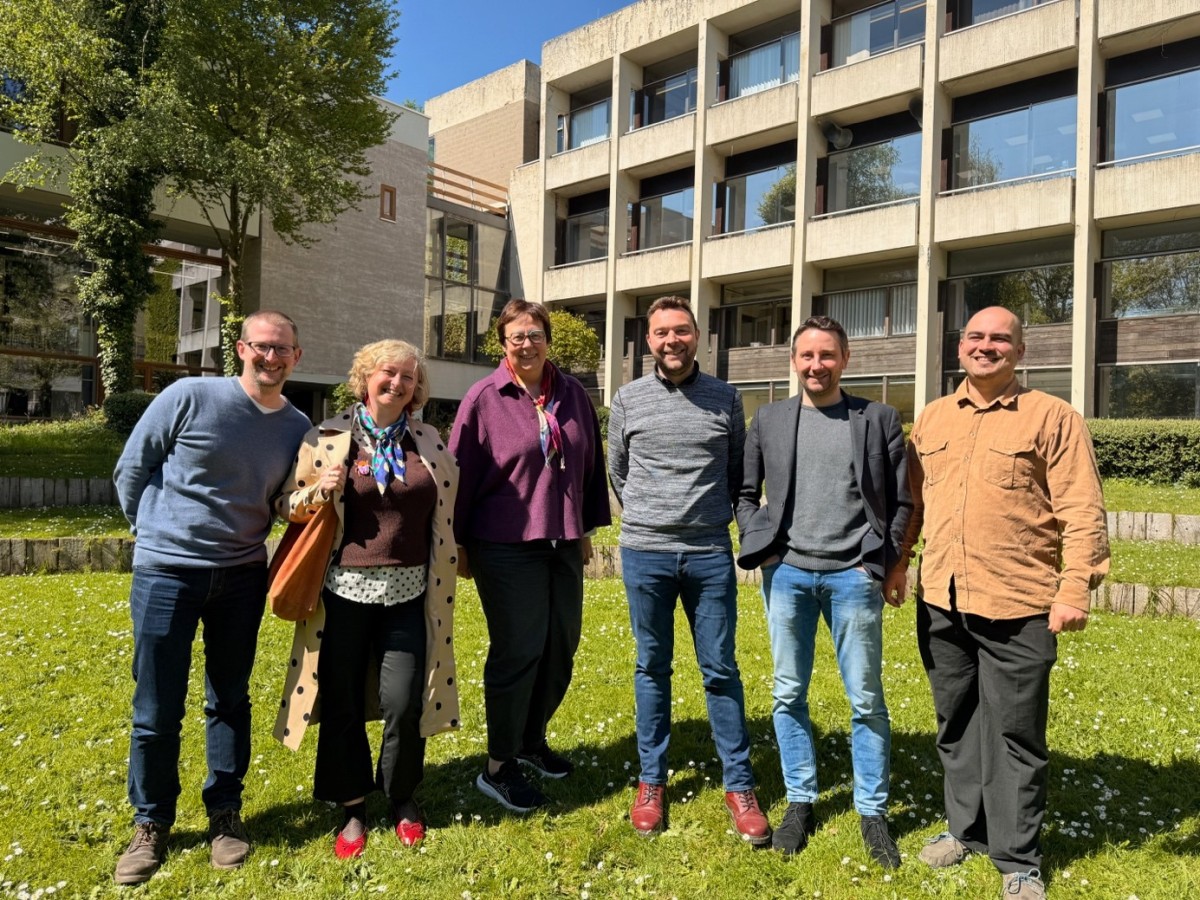
The current research projects clearly illustrate these various challenges. In mathematics education research, Prof. K. Balhan is collaborating with GECEMS (Grupo de estudos do cálculo no ensino médio e superior) and LADICHEC (Laboratory for Research in Mathematics Education at ICHEC Brussels Management School) to design a reference epistemological model, enabling a unified approach to the teaching of mathematical analysis.
Balhan : https://orbi.uliege.be/ph-search?uid=u224306
A scientific inquiry approach
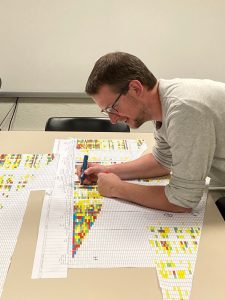
In the field of sciences and biological sciences research, Profs M.-N. Hindryckx and C. Poffé are studying the foundations of developing a scientific inquiry approach, the challenges posed by the questioning it generates during the learning process, and the role and use of models (including diagrams and 3D representations).
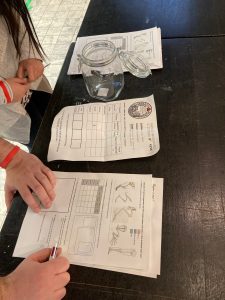
In addition, interdisciplinary participatory research is being conducted on the place and foundations, within science lessons, of Education for Ecological and Social Transition, through the lens of Socially Relevant Issues.
In chemistry education, Profs V. Natalis and C. Collette are studying students’ concept maps regarding chemistry concepts such as entropy – in collaboration with Prof. Patrice Potvin (UQAM, Canada). In geography education, research at the interface between university professional training and spatial planning practices aims to integrate geospatial technologies into teaching in relation to learning about spatial thinking and reasoning, the development of methods and tools including simulation and/or serious games, etc.
In physics education research, Prof. P.-X. Marique is conducting research with Prof. L. Morge’s laboratory (University of Clermont-Auvergne) on the choices made in graphical representations in physics lessons and their impact on students’ alternative conceptions during the learning process.
M.-N. Hindryckx : https://orbi.uliege.be/ph-search?uid=U030286
C. Poffé : https://orbi.uliege.be/ph-search?uid=u210471
V. Natalis : https://orbi.uliege.be/ph-search?uid=u225049
C. Collette : https://orbi.uliege.be/ph-search?uid=u016398
P.-X. Marique : https://orbi.uliege.be/ph-search?uid=u201929
Enhancing the teaching and learning of science and mathematics
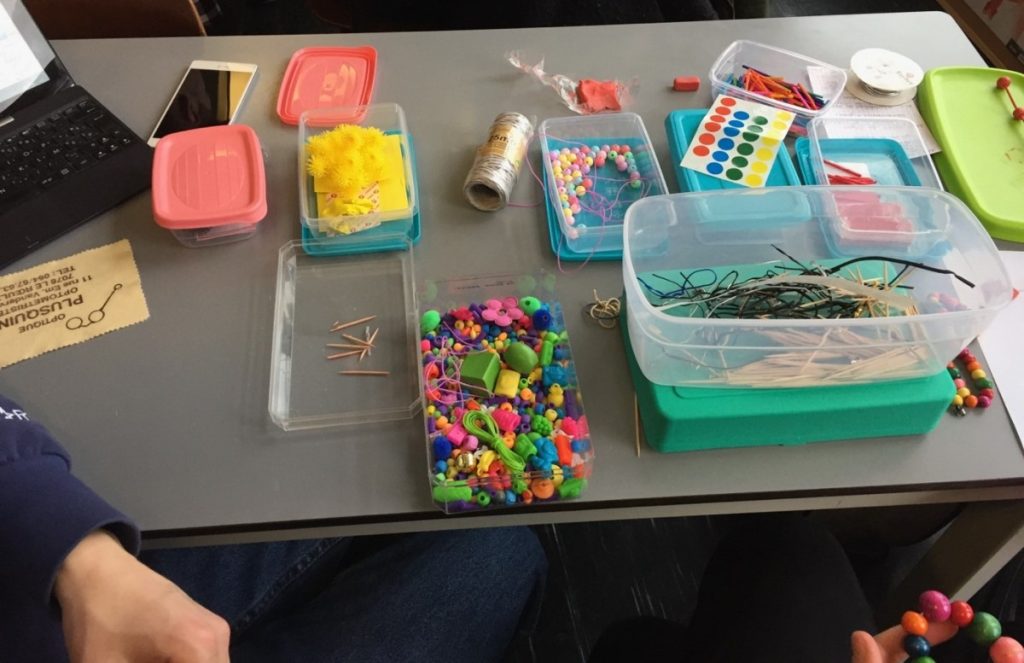
Building on numerous research collaborations (e.g.: meetings of the International Francophone Network for Research in Education and Training – REF: https://ref2026.evenement.usherbrooke.ca, Prof. P. Roy at the University of Fribourg, Profs Ch. Orange and D. Orange Ravachol at the Universities of Lille and Nantes, Prof. P. Schneeberger at the University of Bordeaux, Profs E. Plé and L. Dedieu at the University of Reims; Profs P. Potvin from UQAM; L. Morge from U. Clermont-Auvergne…), the Centre aims to promote research in educational methodology to improve initial (and continuing) teacher training and, thereby, enhance the teaching and learning of science and mathematics. Whilst interdisciplinarity is necessary, disciplinary education research must retain its own identity: what is being taught and what impact does this have on teachers and students? This is a crucial guiding principle for educating students to become critical, creative and committed citizens, working towards a future that is liveable, sustainable and desirable.

Centre de recherche en didactique des sciences et des mathématiques de l’Université de Liège (ULiège)
Place du 20-août 7
Bât. A1, 0/6 – Faculté de Philosophie & Lettres
B-4000 Liège
Tél. : +32 (0)4 366 46 60
E-mail : secretariat.cefen@uliege.be
:+balancing+interdisciplinarity+and+a+distinct+identity&description=&image=https://belgian-research.eu/wp-content/uploads/image-1-1024x768.jpg)