
An Interview with Prof. Ludovic TROIAN-GAUTIER,
FNRS Senior Researcher and Investigator at the WEL Research Institute,
Institute of Condensed Matter and Nanosciences (IMCN),
MOST Molecular Chemistry, Materials and Catalysis (MOST)
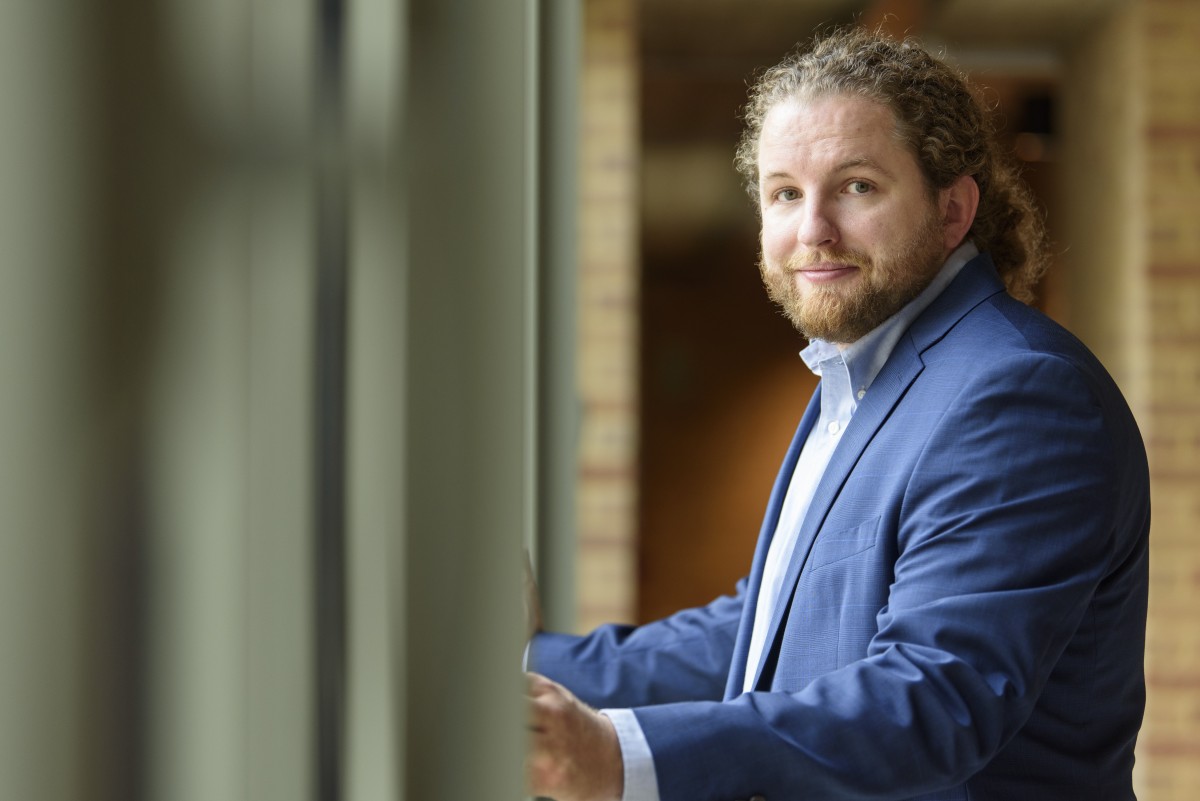
Could you outline the main areas of focus for your research group within MOST?
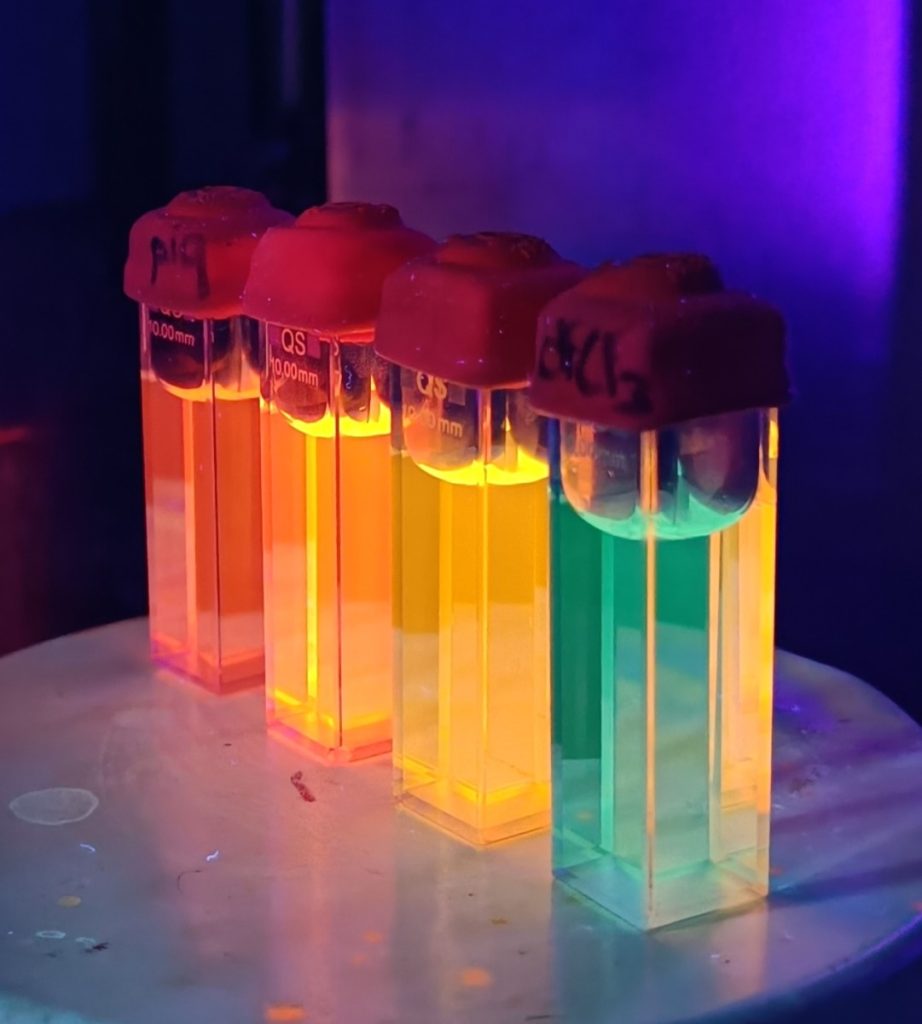
At the interface of photochemistry and photophysics, we study the physical and chemical processes that occur when a chromophore absorbs light. Our work combines a fundamental approach with practical applications. One of the major challenges is solar energy: we are exploring the storage of solar energy in the form of ‘solar fuels’, where energy is stored in chemical bonds. This includes, for example, the production of hydrogen (H2) through proton reduction, or methane via the reduction of CO2.
What sets our group apart is our detailed investigation of photocatalysis, i.e. reactions triggered by the absorption of a photon, from a mechanistic perspective using time-resolved spectroscopic techniques covering time scales ranging from femtoseconds to seconds. When a chromophore absorbs light, it creates an excited state that alters its redox properties (its ability to donate or accept an electron) and enables chemical reactions to be initiated via, for example, photo-induced electron transfer, generating a so-called ‘geminate’ radical pair. A key focus of our research concerns detailed understanding of the fate of these geminate radical pairs. This understanding, developed in collaboration with Profs Benjamin Elias (UCLouvain) and Yoann Olivier (UNamur), is essential for improving the efficiency of photocatalytic reactions and optimising the use of photons.
Could you give us some examples of current research projects?
One major project concerns the development of new chromophores based on abundant metals such as iron, manganese and cobalt. We have recently developed iron complexes with microsecond-lived excited states, which are approximately a thousand times longer than those previously reported for this type of chromophores.
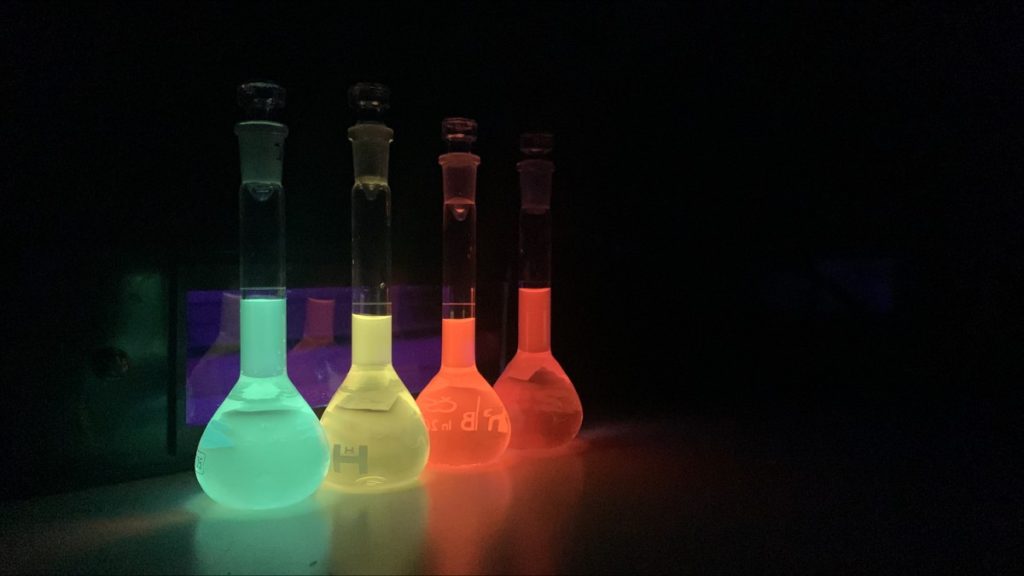
A second project focuses on the ‘cage escape’ phenomenon (the separation of the geminate radical pair following photoinduced electron transfer) and, more broadly, on understanding the mechanisms of photoreactions in order to provide guidelines for photocatalysis and to optimise reactions in a more rational and efficient manner.
Another particularly innovative project is the ‘OSCAR BLINQ’ programme. Carried out with Jaroslav Hruby (UHasselt), Anna Ermakova (UHasselt and the Royal Belgian Institute for Space Aeronomy (BIRA-IASB)), it aims to develop a platform of quantum sensors based on (nano)diamonds to study chemical reactions in microgravity conditions. It thus contributes to advances in astrochemistry, atmospheric chemistry and the development of new analytical technologies, with potential applications for space exploration.
What do you consider to be the main challenges in your field of expertise?
A key challenge is the development of systems capable of carrying out chemical transformations or producing solar fuels with high efficiency, both in terms of energy and atom economy.
Another challenge concerns the observation of photo-induced processes in certain spectral windows or at extreme time scales. It is therefore essential to increase investment in large-scale infrastructure.
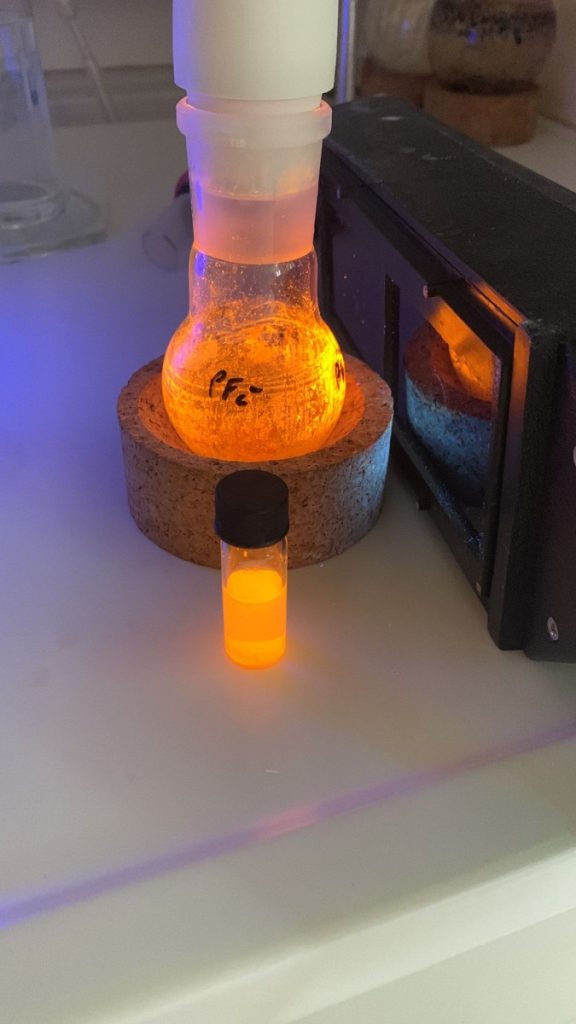
A further challenge lies in replacing rare metals with more readily available elements (iron, manganese) whilst maintaining high performance.
Finally, another major challenge is the translation of laboratory results into large-scale, stable and economically viable functional systems in the field of solar fuels and photocatalysis.

MOST Molecular Chemistry, Materials and Catalysis (MOST)
Université catholique de Louvain
Institute of Condensed Matter and Nanosciences
Lavoisier building
Place Louis Pasteur 1, mailbox L4.01.02,
B-1348, Louvain-la-Neuve
Tel. : + 32 (0)10-47.27.40
E-mail : ludovic.troian@uclouvain.be
https://www.uclouvain.be/en/research-institutes/imcn/most/prof-ludovic-troian-gautier
https://www.uclouvain.be/en/research-institutes/imcn/uncaged
