With over 3,000 patients daily and more than 7,000 employees, Ghent University Hospital (UZ Gent) is one of the largest and most specialised hospitals in Flanders. Patients have access to a full spectrum of high-quality, specialised care. The hospital offers extensive facilities, including more than 1,000 beds for both day and multi-day admissions.
Patient-centred, high-quality care is at the heart of UZ Gent’s services. As a university hospital, UZ Gent also invests heavily in scientific research and education. The hospital works closely with the Faculty of Medicine and Health Sciences of Ghent University, training doctors and specialist physicians while supporting researchers in developing new diagnostic and treatment techniques.
Currently, the hospital campus is undergoing a major transformation. By 2029, UZ Gent aims to become a modern, accessible, and sustainable health campus tailored to the needs of all users.

Scientific spearheads
Since 2009, UZ Gent has followed a scientific spearhead strategy. In collaboration with the Faculty of Medicine and Health Sciences, four research domains have been designated for priority investment: oncology, genetics, immunology, and neuroscience.
These domains were selected based on objective criteria, including international peer recognition, the number of A1 publications, trends in epidemiology, and healthcare demands. The translational nature of the research and its potential for societal impact were also key factors. This spearhead policy ensures research quickly translates into improved patient care. UZ Gent currently holds a leading position in each of these four fields.
Research activities are organised through the Ghent Healthcare Knowledge Centre (KCGG) and the Health, Innovation and Research Institute (HIRUZ), which comprises five specialised units: Clinical Trials, Data Management, Contracting, Innovation & Valorisation, and the Biobank.

New building: Nobel I
In April 2025, UZ Gent opened the Nobel I building, part of its extensive campus renovation Project U. Nobel I currently houses the outpatient clinics for Dermatology, Nephrology, and Plastic Surgery, as well as the Drug Research Department and ICT services. According to Managing Director Professor Dr. Frank Vermassen, “Nobel I will eventually become a hub for healthcare education, research, and innovation.”
The building has thirteen floors above ground and a basement level. “Nobel I enables us to trial innovative materials and systems for future hospital construction,” explains project leader Geert De Waele. Features include abundant natural light through large windows and a green roof with trees and plants, offering panoramic views of Ghent. The building’s exterior integrates an energy-efficient facade, with solar panels on the south side and design elements to reduce heat gain.
New cleanroom for drug preparation
Starting in 2026, every hospital pharmacy must comply with the strict PIC/S standard for pharmaceutical preparations. Despite the large scale of Ghent University Hospital’s pharmacy, the hospital didn’t wait for that deadline. Opening of the new cleanroom in the spring of 2024, the pharmacy became the first in a Flemish university hospital to meet the new standard.
“We produce 80,000 sterile preparations annually, including 40,000 for cancer treatments,” says Pieter Ramaut, deputy chief pharmacist of Production. “This infrastructure allows us to expand and optimise our services for clinical trials,” adds Els Kestens, deputy chief pharmacist of Clinical Studies. UZ Gent supports approximately 600 clinical trials, involving 3,500 drug preparations annually.

The new cleanroom offers advanced facilities for sterile and non-sterile medicine preparation, equipped with nine isolators, three laminar airflow cabinets, and two powder extraction cabinets. Hospitals that do not wish to invest in their own cleanroom can eventually enter into partnerships for this infrastructure.
Good Manufacturing Practices
An additional GMP-certified cleanroom allows for the production of non-sterile medicines for clinical studies. UZ Gent’s pharmacy is the only hospital pharmacy in Belgium with this this permit. It produces medicines for clinical studies for internal and external partners. There is also sufficient space for storing and labelling study medication. This infrastructure enables obtaining a GDP (Good Distribution Practices) permit for clinical studies.
“The combination of these facilities on campus, close to researchers, makes our Clinical Studies department a preferred partner for researchers and pharmaceutical companies,” explains Els Kestens. “We offer end-to-end services, GMP services, hospital exemption services, small batch production, and express services.”
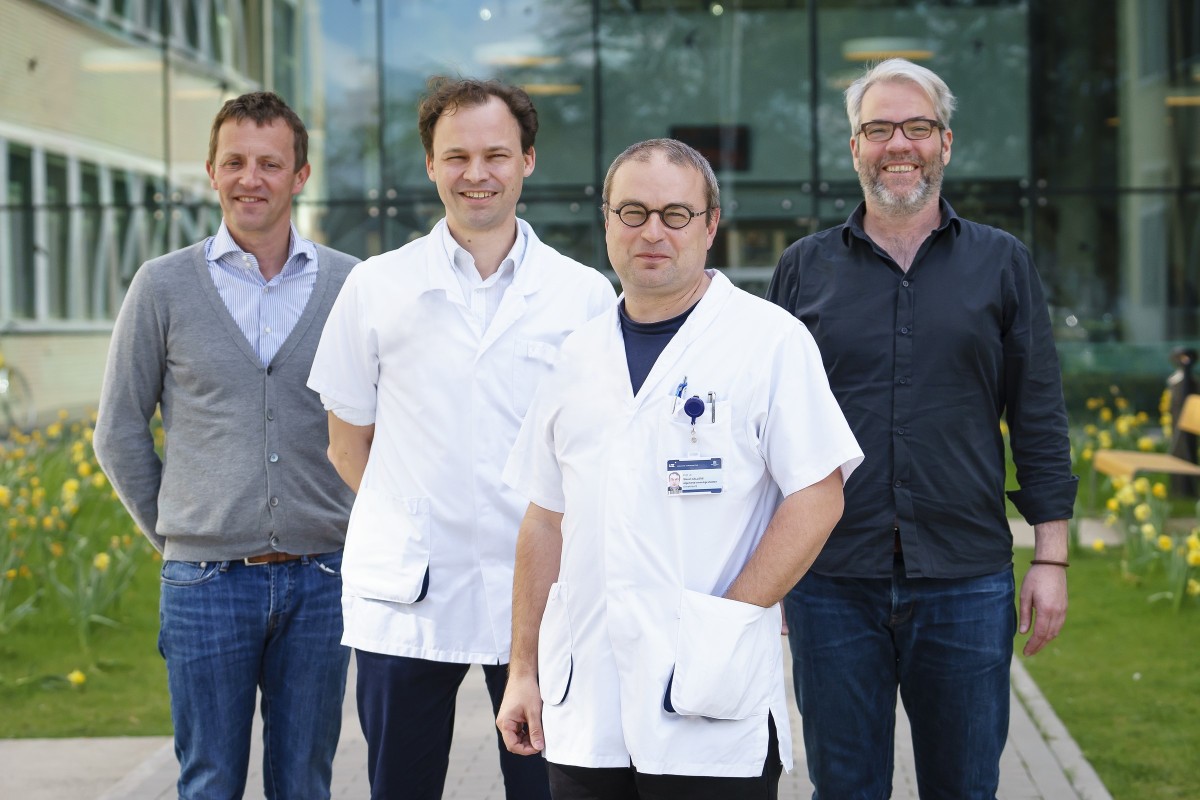
Ten years of research result in 138 diagnoses of very rare diseases
Over the past 10 years, the PrOZA team at Ghent University Hospital (UZ Gent) has studied 768 patients whose symptoms had remained unexplained. Ultimately, 18% of them received a diagnosis.
In 2015, UZ Gent established the Programme for Undiagnosed Rare Diseases (PrOZA) to help patients suspected of having a rare disease obtain the correct diagnosis more quickly. Medical geneticist Prof. Bruce Poppe: “When you know that patients wait an average of 19 years for a correct diagnosis of a rare disease, it is our responsibility as a multidisciplinary team to change that.”
After ten years, the team is taking stock. A total of 1,453 patients were referred by their treating physicians. Prof. Poppe: “After a cautious start, our programme became better known among patients and fellow doctors. We soon saw the number of referrals increase significantly. The introduction of innovative genetic technologies enabled us to provide an explanation for many ‘cold cases.’ These results have ensured that the number of referrals continues to rise.”
Extensive diagnostic work-up
In about half of the referrals (768), the PrOZA team suspected an underlying rare disease and started an extensive diagnostic work-up. Half of the patients investigated (383) immediately underwent genetic testing. Using exome sequencing, an analysis of the DNA sequence can identify where the disease-causing genetic variant is located. The other patients (385) were seen in consultation, often followed by additional blood tests and medical imaging.
When the team considered an underlying rare disease highly unlikely, it provided feedback to the referring physician, together with further advice or a targeted referral. This was the case for 685 referred patients. Ultimately, 138 patients received a diagnosis. Eighty per cent of the diagnoses had a genetic origin.
During this period, the team also discovered three new rare diseases. Two of them were reported in leading scientific publications, including Nature Genetics. The discovery of the third disease is now entering the final stage of the research process.
European detective work: ERDERA
UZ Gent has internationally recognised expertise in numerous rare diseases and is part of 21 of the 24 European Reference Networks (ERNs) for rare diseases. Since 2025, 170 organisations from 37 countries have been working together to study 100,000 unresolved patient cases at European level through the European Rare Disease Research Alliance (ERDERA). Reanalysis using innovative computer-based techniques and large amounts of patient data may thus lead to a diagnosis after all.
UZ Gent treats first Belgian MS patient with CAR T-cell therapy
The Neurology and Haematology departments at Ghent University Hospital (UZ Gent) are jointly investigating a new treatment for patients with multiple sclerosis (MS). As part of an international clinical trial, the first MS patient in Belgium has received immunotherapy with CAR T cells.
Neurologist Prof. Guy Laureys: “CAR T-cell therapy is now a well-established treatment for blood cancers, but we believe it may also work in patients with an autoimmune disease such as MS. The first patient in the trial responded well to the treatment and showed improvement. Her MS relapses are currently under control.” CAR T-cell therapy is a form of immunotherapy in which a patient’s own immune cells are modified to recognise and destroy disease-causing cells more effectively. This is precisely why the treatment is an interesting avenue for patients with MS.
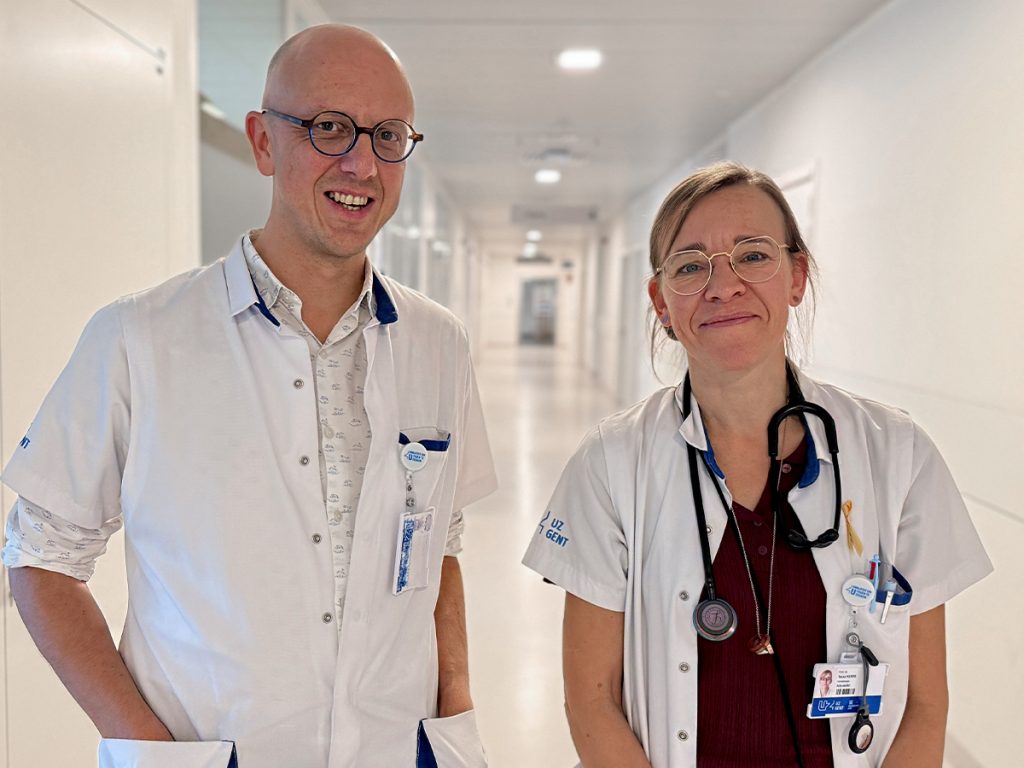
In 2025, the teams led by Prof. Laureys and Prof. Kerre treated the first Belgian MS patient with CAR T-cell therapy. The patient has RRMS, a form of MS characterised by alternating periods of relapses and recovery. Other treatments were no longer effective for her. A second patient, who has PPMS, a form of MS in which symptoms gradually worsen without relapses, followed in the autumn.
Haematologist Prof. Tessa Kerre looks back on the development of CAR T-cell therapy: “It was originally developed to treat blood cancers. The first child in Europe to receive CAR T-cell therapy underwent the treatment at UZ Gent in 2016. Since then, we have treated more than 200 patients with CAR T-cell therapy, both adults and children with different types of blood cancer. Following these applications in oncology, we are now also exploring its potential for autoimmune diseases such as MS and systemic sclerosis.”